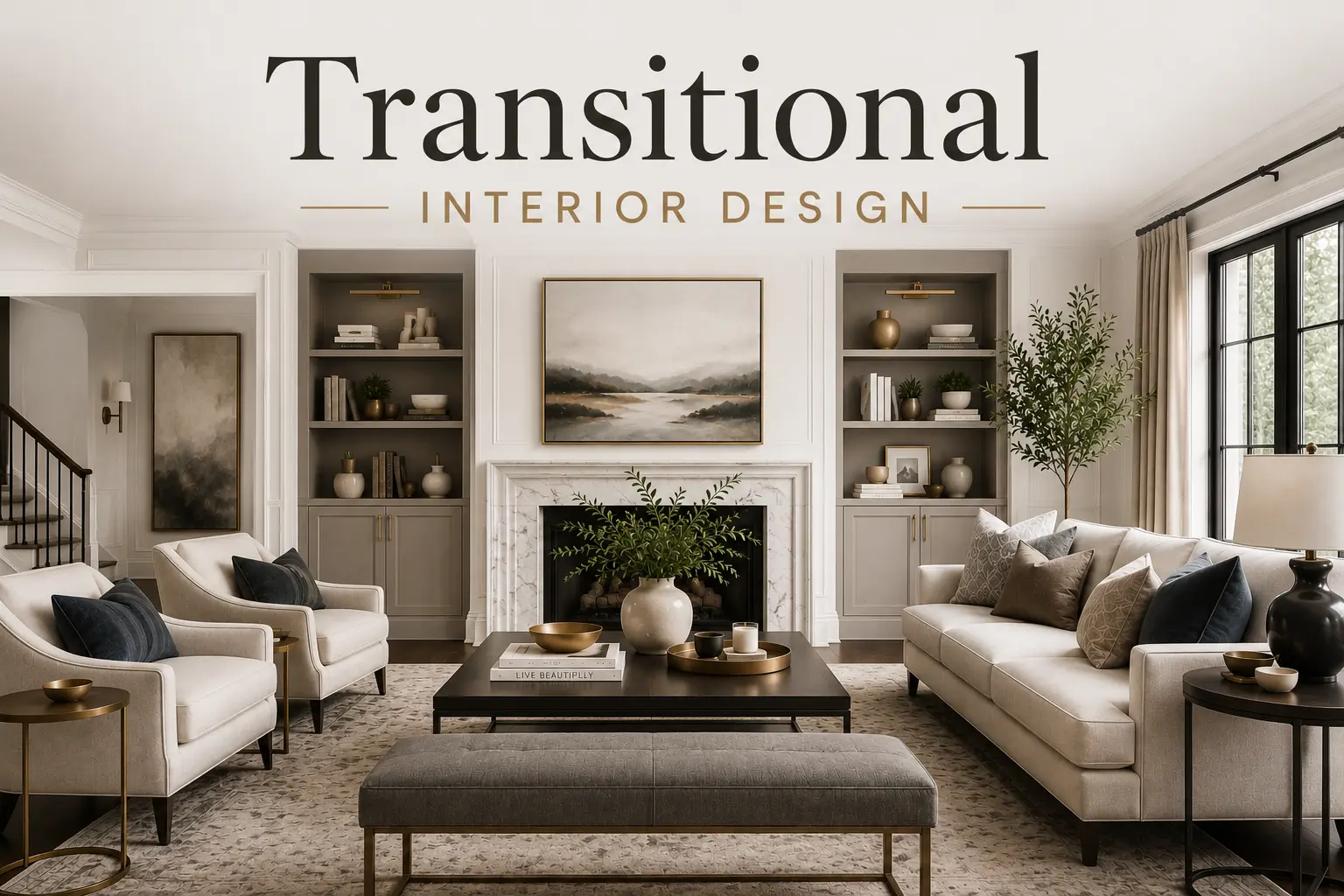
Interior design trends may evolve over time, but certain aesthetics endure because they create homes that feel both elevated and inviting. Among today’s most sought-after styles, transitional interior design has become synonymous with understated luxury — offering a sophisticated balance between timeless elegance and modern simplicity.
Rather than leaning heavily traditional or starkly contemporary, transitional interiors seamlessly blend the warmth of classic design with the clean refinement of modern living. The result is a home that feels curated yet comfortable, polished yet deeply livable.
Defined by tailored furnishings, layered textures, calming palettes, and thoughtful restraint, transitional spaces embody a quiet sophistication that appeals to discerning homeowners seeking interiors with lasting relevance rather than fleeting trends.
One of the reasons transitional design continues to resonate in luxury homes is its versatility. The style adapts beautifully to expansive estates, contemporary residences, open-concept homes, and upscale urban living alike. More importantly, it creates interiors that feel timeless — spaces designed to evolve gracefully for years to come.
In this guide, we’ll explore what defines transitional interior design, the elements that shape its distinctive aesthetic, and how to bring this refined, balanced approach into your own home.
Transitional interior design is a sophisticated design approach that harmoniously blends traditional and contemporary influences into one cohesive aesthetic. It creates interiors that feel timeless yet current, elegant yet approachable, and luxurious without appearing overly formal.
Rather than committing fully to ornate traditionalism or stark modern minimalism, transitional design exists in the perfect middle ground. This balance is what gives the style its enduring appeal and exceptional versatility.
A well-designed transitional home feels calm, inviting, and effortlessly refined — where every detail contributes to a sense of warmth, comfort, and understated elegance.
Color establishes the foundation of a transitional interior. Soft neutrals, warm mineral tones, and muted earthy hues create spaces that feel serene, layered, and quietly luxurious.
Warm whites, creamy ivories, taupes, soft grays, mushroom tones, and subtle earth-inspired shades are often used throughout the home to establish a calming and cohesive atmosphere. These understated palettes allow architectural details, furnishings, textures, and curated materials to take center stage.
Accent colors are typically restrained and sophisticated rather than bold or high contrast. Deep navy, olive green, charcoal, bronze, muted blues, and warm metallic finishes are often introduced through artwork, textiles, or decorative accessories.
The result is an environment that feels harmonious, elevated, and effortlessly timeless.
Furniture within transitional interiors is defined by clean lines, graceful proportions, and exceptional comfort.
Unlike heavily ornate traditional furnishings, transitional pieces feature simplified silhouettes and refined detailing. At the same time, they avoid the rigid or overly minimalist appearance often associated with ultra-modern design.
A transitional sofa may feature tailored upholstery and structured lines while still offering plush cushions and generous seating depth. Dining chairs often combine sculptural forms with soft upholstery, balancing sophistication with everyday comfort.
This careful balance between structure and softness creates interiors that feel both polished and welcoming.
In transitional design, texture becomes essential for creating visual richness and dimension.
Because the color palette is intentionally restrained, materials and finishes play a central role in shaping the atmosphere of the space. Rather than relying on heavy patterns or excessive ornamentation, transitional interiors layer natural textures to create warmth and depth.
Linen drapery, velvet seating, natural woods, leather, marble, woven textiles, brushed metals, and artisan finishes are thoughtfully combined to create a highly curated yet comfortable environment.
This layered materiality gives transitional interiors their signature sense of understated luxury — spaces that feel refined without feeling overdesigned.
Transitional interiors embrace a more intentional approach to styling. Every piece within the space should feel purposeful and considered.
Rather than filling rooms with excessive accessories or decorative clutter, transitional homes rely on fewer, more impactful elements. Oversized artwork, sculptural lighting, statement mirrors, architectural accents, and carefully selected decorative objects help complete the space while preserving visual clarity.
This restraint allows the architecture, furnishings, and materials to breathe, creating interiors that feel calm, sophisticated, and effortlessly elevated.
Although transitional and modern interiors may share certain similarities, they create distinctly different experiences.
Modern design often emphasizes minimalism, sharp geometry, sleek surfaces, and highly simplified forms. While beautiful, modern spaces can sometimes feel more structured or restrained.
Transitional interiors introduce softness, warmth, and a stronger sense of livability. Clean lines remain important, but they are balanced with layered textures, timeless detailing, and furnishings designed for comfort as much as aesthetics.
Where modern interiors prioritize minimalism, transitional design focuses on achieving harmony between elegance and ease.
Related post: Modern vs Traditional Interior Design
Creating a transitional interior begins with establishing a refined and timeless foundation.
Start with soft neutral palettes, thoughtfully scaled furnishings, and quality materials that feel elevated without appearing overly formal. Focus on pieces that combine clean silhouettes with inviting comfort.
Layer natural textures throughout the space to create warmth and visual dimension. Linen drapery, woven rugs, rich woods, upholstered seating, natural stone, and subtle metallic accents all contribute to the transitional aesthetic.
Lighting also plays a significant role in shaping the atmosphere of the home. Sculptural pendants, layered ambient lighting, architectural sconces, and soft illumination help create interiors that feel intimate, intentional, and quietly luxurious.
Most importantly, transitional interiors thrive on balance and restraint. Every selection should feel curated, allowing the space to feel sophisticated while remaining highly livable.
Homeowners are increasingly drawn to transitional interiors because the style supports both beauty and everyday living.
It offers the comfort and warmth people desire in a home while maintaining a polished, elevated aesthetic. Unlike trend-driven interiors that quickly feel dated, transitional spaces evolve gracefully over time.
The versatility of the style also makes it exceptionally adaptable. Whether designing a luxury residence, a contemporary estate, or a sophisticated city home, transitional interiors create a timeless sense of balance that feels universally appealing.
Its emphasis on comfort, refinement, and enduring beauty is what continues to make transitional design one of the most sought-after interior styles today.
A beautifully designed transitional home is far more than a blend of traditional and modern influences — it is a carefully curated environment that feels balanced, refined, and deeply personal.
From layered textures and tailored furnishings to calming palettes and architectural details, every element should support the way you live while reflecting your lifestyle with sophistication and ease.
At Tower Design, we create elevated interiors that combine timeless elegance with modern comfort. Our approach to transitional interior design focuses on thoughtful material selections, bespoke furnishings, and spaces that feel effortlessly luxurious while remaining exceptionally livable.
Whether you are redesigning a single room, furnishing a new residence, or transforming an entire home, our team delivers a highly personalized design experience tailored to your vision and lifestyle across California and beyond.
Connect with Tower Design to schedule a private design consultation and discover how transitional interior design can bring balance, elegance, and lasting beauty to your home.
Transitional interior design is a sophisticated style that blends traditional and contemporary influences to create spaces that feel timeless, elegant, and comfortable. The aesthetic emphasizes neutral palettes, clean-lined furnishings, layered textures, and understated luxury.
Furniture with tailored silhouettes, soft curves, refined detailing, and comfortable upholstery works beautifully in transitional homes. The style often combines modern simplicity with classic elegance.
Common materials include natural wood, linen, velvet, leather, marble, stone, glass, woven textiles, and subtle metallic finishes. Transitional interiors rely heavily on layered textures to create warmth and depth.
Begin with a neutral foundation, incorporate comfortable yet tailored furnishings, layer natural textures, and maintain a clean, uncluttered aesthetic. The key is achieving balance between timeless elegance and modern simplicity.
Traditional interiors tend to feature more ornate detailing and formal styling, while transitional interiors simplify those elements with cleaner lines, softer palettes, and a more relaxed, contemporary feel.
Homeowners are drawn to transitional design because it feels timeless, sophisticated, and highly livable. The style adapts beautifully over time and avoids feeling overly trendy or overly formal.
Yes. Transitional design is especially popular in luxury residences because it creates interiors that feel elegant, refined, and inviting while maintaining a timeless sense of sophistication.