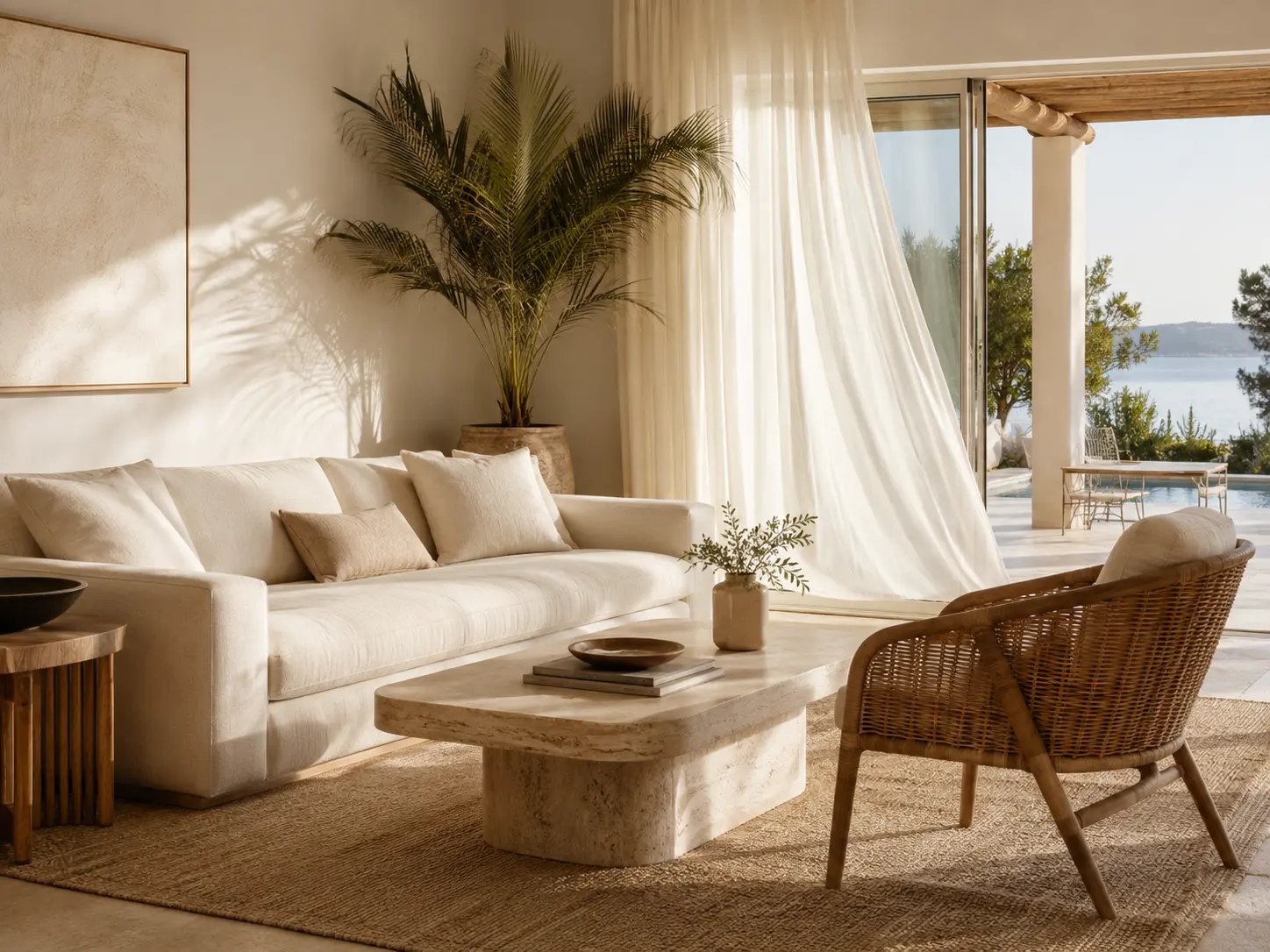
There is a particular feeling that comes over you when you arrive at an exceptional resort.
The pace seems to change.
The light is softer. The air feels calmer. Materials invite touch. Views are framed with intention. There may be the subtle scent of wood, flowers, stone warmed by the sun, or fresh air moving through an open door. Nothing appears hurried or accidental.
And almost without realizing it, you exhale.
What we respond to in these environments is not simply luxury. It is intentionality.
The most memorable resorts understand something fundamental about design: our surroundings affect us. Light, color, texture, proportion, sound, art, nature, and even the amount of empty space around us can influence how we feel.
At Tower Design, this idea has always been central to our work. Through the lens of living a more peaceful life, we take it one step further: a beautifully designed home should not simply impress us visually. It should reflect who we are, hold what matters to us, and support the way we want to live.
Your home can be beautiful and restorative. Sophisticated and deeply personal. Elevated without feeling precious.
It can become a sanctuary.
Resort-style living is less about reproducing the appearance of a luxury hotel and more about understanding why certain environments make us feel so good.
The best hospitality spaces are orchestrated as complete sensory experiences. Architecture, lighting, furnishings, landscape, materials, art, scent, acoustics, and circulation work together rather than competing for attention.
There is a sense of rhythm.
There are moments of openness and intimacy. Places to gather and places to retreat. Natural materials balance more refined surfaces. Art provides character and emotional resonance. Lighting changes as the day progresses.
Nothing needs to announce that it is luxurious.
It simply feels considered.
That distinction is important when translating resort living into a private residence. Your home should never feel like a hotel. It should feel unmistakably like you.
The goal is to borrow hospitality's mastery of comfort, atmosphere, and experience and reinterpret it through your architecture, collections, memories, lifestyle, and personal aesthetic.
That is where resort living becomes sanctuary.
Color is one of the most powerful emotional tools available to a designer.
Resort environments often use restrained palettes because visual continuity creates calm. Warm whites, mineral tones, sand, limestone, clay, muted greens, soft blues, and colors drawn from the surrounding landscape can establish a quiet foundation.
But sanctuary design does not require a home to be beige.
Color should be personal.
A deep blue may evoke the ocean. Ochre might recall a landscape you love. A saturated green may create an extraordinary backdrop for art. A subtle plaster finish can change throughout the day as sunlight moves across it.
Rather than selecting colors room by room, we prefer to develop a color story for the home—a palette with relationships, transitions, and moments of surprise.
The result is cohesion without monotony and individuality without visual chaos.
Some of the world's most beautiful resorts dissolve the boundary between architecture and landscape.
Doors disappear into walls. Interior flooring seems to continue onto terraces. Outdoor rooms are furnished with the same thoughtfulness as interior ones. Views become part of the composition.
That connection to nature has an almost primal effect.
In a residence, indoor-outdoor living might mean expansive sliding glass doors, a protected dining terrace, an outdoor fireplace, beautifully furnished gardens, or materials that visually connect interior and exterior spaces.
But it doesn't require major construction.
A chair positioned toward a beautiful view, linen drapery moving gently in an open window, a sculptural tree outside a strategically framed window, or simply allowing natural light to enter unobstructed can transform the experience of a room.
Nature should not feel like something outside the house. It should become part of the design.
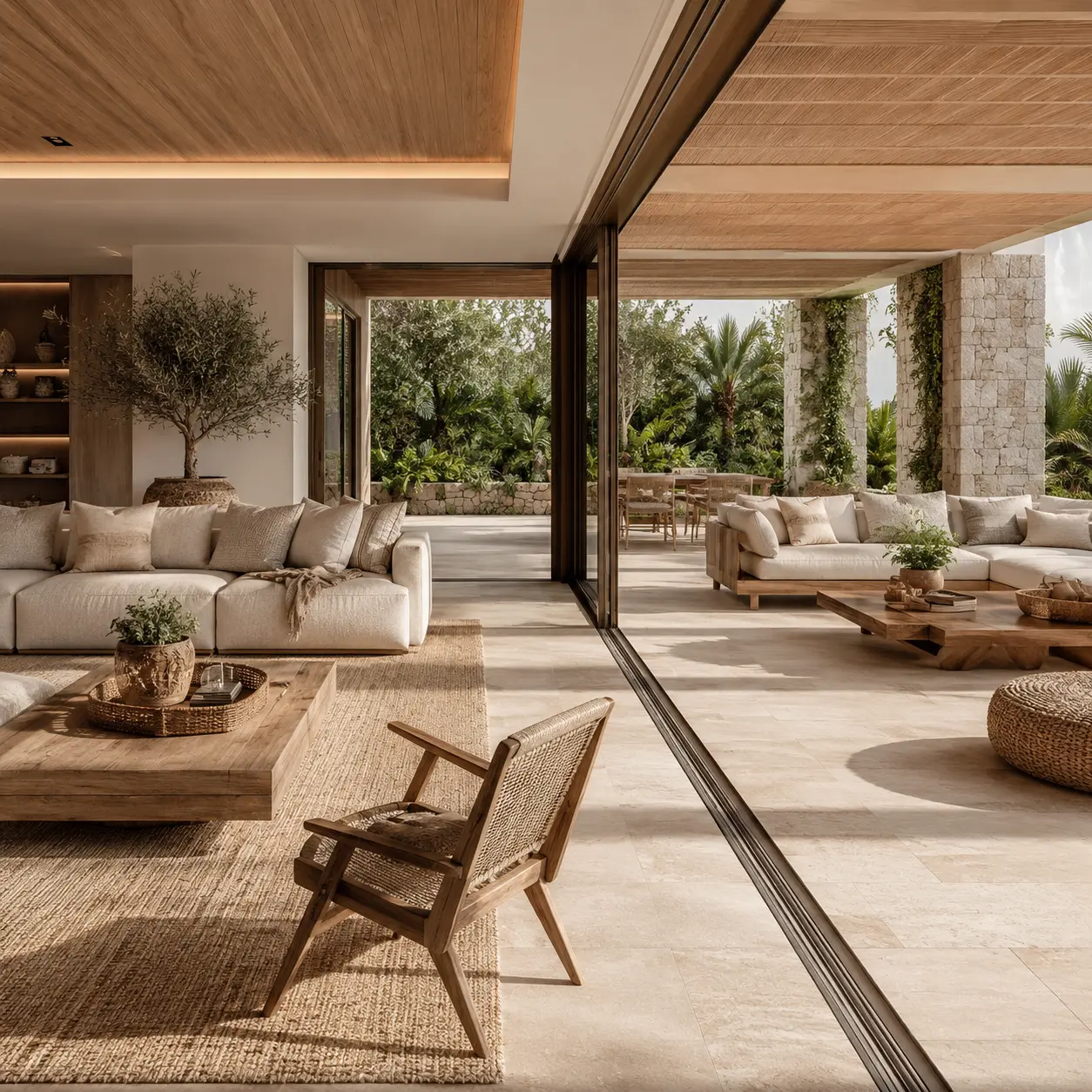
Large-format sliding or folding glass doors, covered patios furnished as true living spaces, and consistent flooring materials that carry from interior to exterior all help a home feel larger and more connected to nature. Even without a full architectural renovation, homeowners can achieve this effect with strategically placed seating near windows, unobstructed views, and outdoor spaces designed with the same care as an indoor room.
Bathrooms are among the most intimate rooms in a home, yet they are frequently approached as collections of fixtures and finishes.
We prefer to think of them differently.
A beautifully designed primary bathroom can create a transition between the demands of the outside world and the privacy of home.
Natural stone, warm woods, beautifully proportioned vanities, generous showers, sculptural soaking tubs, radiant flooring, integrated lighting, and thoughtfully concealed storage all contribute to the experience.
But atmosphere is equally important.
Imagine entering a bathroom at night without turning on harsh overhead lighting. Instead, a softly illuminated niche, concealed lighting beneath a vanity, and a pair of beautiful sconces provide just enough light.
Add exceptionally soft towels, a favorite scent, a place for flowers, art or a meaningful object, and suddenly an everyday routine becomes something closer to ritual.
That is sanctuary design: elevating ordinary moments through thoughtful surroundings.
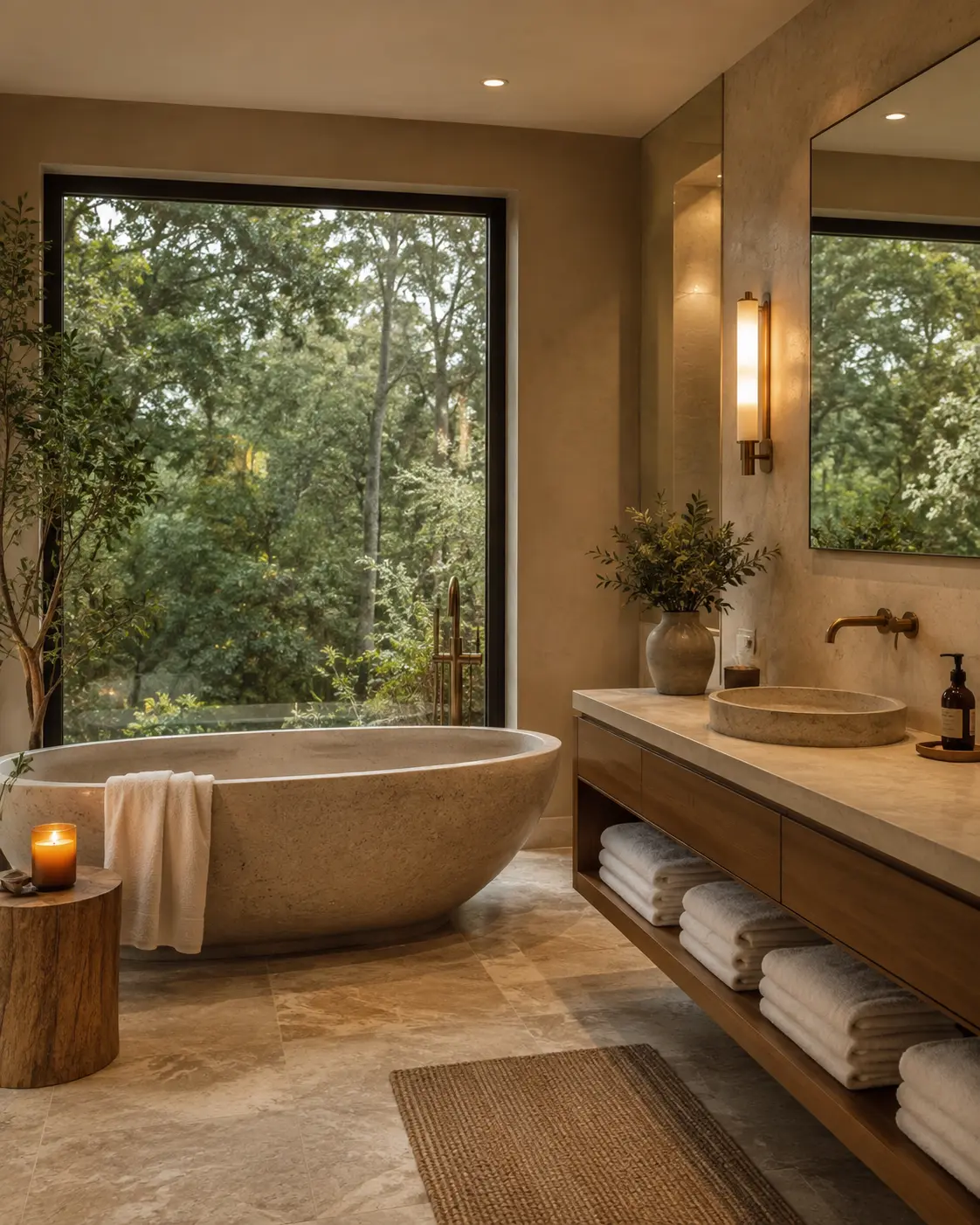
Small additions like plush towels, a dedicated space for candles or diffusers, and heated flooring can meaningfully elevate a bathroom from purely functional to genuinely.
Take a Closer Look at Our Design Experience
Natural materials have an authenticity that is difficult to replicate.
Stone has weight and permanence. Wood brings warmth. Linen filters light differently from synthetic fabric. Hand-applied plaster reveals the mark of the artisan. A beautiful wool rug changes both the acoustics and physical experience of a room.
We are particularly drawn to materials that become more beautiful with time.
Rather than creating rooms where everything feels new and pristine, consider combining refined contemporary pieces with materials that have depth, patina, and history.
A sculptural stone table.
Handwoven textiles.
Warm oak or walnut.
Antique bronze.
Natural linen.
Handmade ceramics.
A vintage piece alongside something decidedly modern.
These contrasts give a room soul.
The objective isn't simply to specify expensive materials. It is to choose materials whose beauty can be experienced, not merely observed.
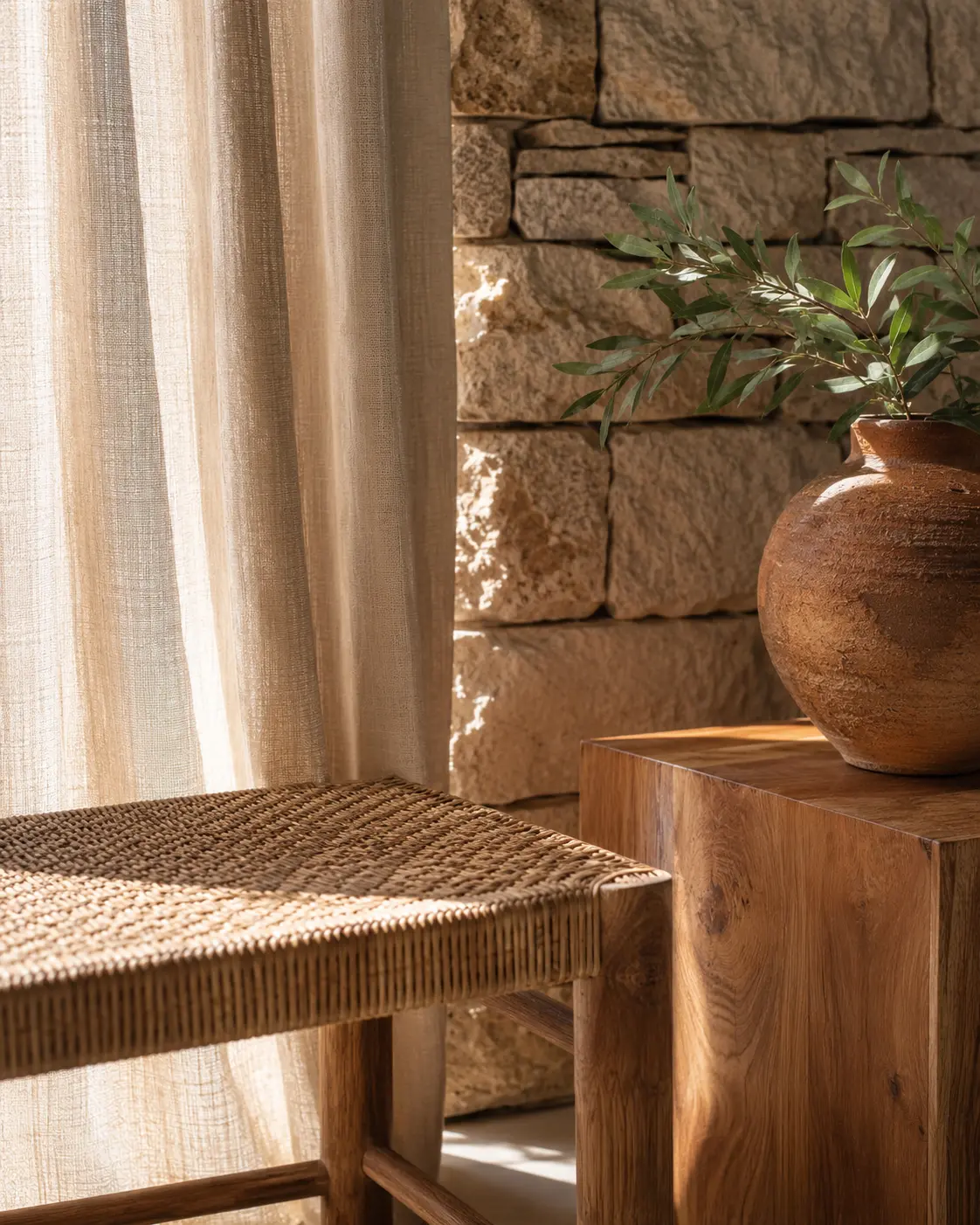
Making a home a sanctuary often starts with reintroducing these natural elements — a woven bench in an entryway, a stone accent wall in a bathroom, linen drapery that softens natural light as it filters into a room.
This is where a private home should depart most dramatically from a resort.
A resort can create atmosphere.
A home can tell your story.
Art, objects collected while traveling, books, family pieces, sculpture, photography, and even something made by a child can carry emotional significance that no newly purchased accessory can duplicate.
At Tower Design, our background in art and art curation has always influenced how we approach interiors. Rather than treating artwork as something added after the furniture arrives, we often allow it to help establish the character, palette, and emotional center of a room.
A powerful painting may need an entire wall.
A sculpture may deserve its own sightline.
A collection may become the organizing principle for a library or hallway.
Sanctuary is not created by removing personality in pursuit of serenity.
It is created by editing carefully enough that the things with meaning can truly be seen.
One of the quietest forms of luxury is space around things.
The most sophisticated interiors are rarely filled to capacity. They are edited.
A beautiful chair becomes more important when it has room around it. Architecture becomes more visible when every wall isn't occupied. A remarkable piece of art gains power when it isn't surrounded by visual competition.
This does not mean a home must be minimalist.
Layered interiors can be wonderfully restorative when every layer has purpose.
The distinction is between abundance and clutter.
Sanctuary requires places for the eye—and the mind—to rest.
Lighting may be the single most underestimated element in residential design.
A room should never depend entirely upon recessed ceiling lights or one decorative fixture.
Exceptional lighting is layered.
Architectural lighting illuminates surfaces and art. Decorative fixtures provide beauty and character. Task lighting supports reading, cooking, dressing, and working. Lamps create pools of intimacy. Concealed illumination can make cabinetry, stone, or architectural details appear to glow.
Most importantly, lighting should change throughout the day.
Morning asks for something different from evening.
As daylight disappears, a sanctuary home should gradually become warmer, softer, and more intimate.
That transition has a profound effect on atmosphere—and on how we experience being home.
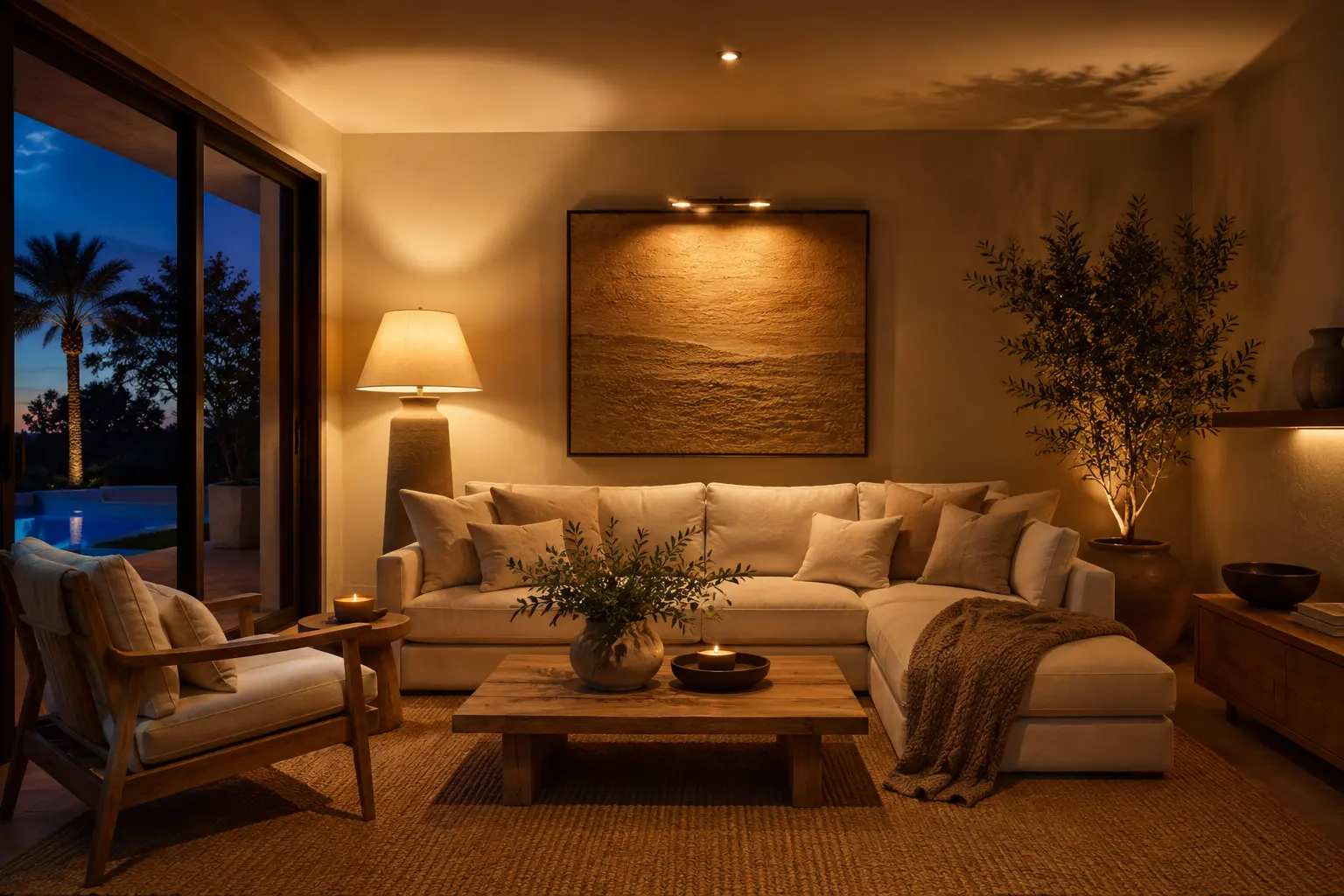
Use dimmable fixtures, warm-toned bulbs, and thoughtfully placed lamps all support the kind of soft, adaptive lighting that makes a space feel like a retreat rather than an office.
We live in an increasingly accelerated world.
Phones follow us everywhere. Work crosses the threshold into home. News, screens, schedules, responsibilities, and constant stimulation compete for our attention.
Our homes have become more important because of it.
They are not simply where we store our belongings or entertain our friends. They are where we return to ourselves.
Thoughtful design cannot eliminate life's difficulties, but it can create an environment that supports us through them.
A bedroom can encourage rest.
A kitchen can encourage gathering.
A studio can invite creativity.
A garden can create contemplation.
A living room can make conversation feel natural.
And a home filled with art, objects, materials, and colors that carry personal meaning can remind us—often subconsciously—of who we are and what we value.
That is a very different definition of luxury.
Also read: Interior Design Trends 2026: Create Spaces You’ll Adore
You do not necessarily need to remodel your entire home. Begin by paying attention to your experience of it.
Notice how you feel when you enter a room. Before thinking about what you want to buy, ask what you want to experience there. Calm? Energy? Intimacy? Creativity? Connection?
Edit before adding. Remove objects and furnishings that create visual noise or no longer have meaning. Often the architecture, art, or furniture already worth celebrating becomes more powerful once unnecessary elements disappear.
Look at what you already love. A painting, textile, inherited object, favorite landscape, or collection may contain the beginnings of your home's color and material story.
Reconnect the interior with nature. Open sightlines. Consider what you see through each window. Introduce natural materials and plants thoughtfully rather than decoratively.
Reconsider your lighting. Add lamps, sconces, picture lights, concealed lighting, and dimmers. Create different lighting scenes for different times of day.
Invest selectively. A home does not need everything at once. One extraordinary rug, beautifully made sofa, important piece of art, or handcrafted table can provide more lasting pleasure than a room filled quickly with things that are merely adequate.
And perhaps most importantly:
Design around the life you want to live—not simply the house you happen to own.
The homes we remember are not necessarily the largest, newest, or most expensive.
They are the ones with presence.
They reveal something about the people who inhabit them. They contain beautiful things, certainly, but they also contain history, individuality, comfort, surprise, and soul.
At Tower Design, we approach interiors through the combined disciplines of design, architecture, art, and curation, creating residences that are sophisticated yet deeply personal.
Through a considered process, we explore an additional layer: how a home can reflect our values, support our aspirations, nurture creativity and wellbeing, and provide a meaningful counterpoint to the demands of the outside world.
Because ultimately, the greatest luxury may not be escaping to a beautiful resort.
It may be creating a home you don't feel the need to escape from.
Tower Design works with clients to create highly personalized interiors shaped by architecture, art, natural materials, exceptional furnishings, and the way each client wants to experience daily life.
Whether reimagining a single important space or creating an entire residence, we begin with something deeper than a design style:
Connect with Tower Design to schedule a private design consultation and begin creating a home that is not simply beautifully designed, but distinctly and meaningfully your own.
Creating a sanctuary means designing your home around both beauty and wellbeing. Color, lighting, materials, art, spatial planning, nature, and meaningful objects are considered together to create an environment that supports rest, connection, creativity, and a sense of belonging.
Resort-style living brings the experiential qualities of exceptional hospitality design—beautiful natural materials, layered lighting, indoor-outdoor connections, generous proportions, spa-inspired spaces, and attention to comfort—into a private residence. The goal isn't to make a home look like a hotel, but to capture the sense of ease that exceptional resorts create.
Begin with how you want to feel in the space. Edit unnecessary furnishings, develop a cohesive color story, improve lighting, introduce tactile natural materials, strengthen connections to nature, and give meaningful art and personal objects greater prominence.
Not at all. Neutral palettes can be calming, but sanctuary design should be personal. Rich blues, greens, earth tones, and other colors can be equally restorative when they are thoughtfully composed and connected to the architecture, art, landscape, and personality of the homeowner.
Indoor-outdoor connections, layered ambient lighting, natural stone and wood, beautifully designed bathrooms, tactile textiles, comfortable furnishings, uncluttered sightlines, and a cohesive material palette are all important. The most successful homes combine these elements with art and objects that make the environment personal.
Yes. Sanctuary is not determined by square footage. A smaller home with beautiful light, carefully edited furnishings, meaningful art, natural materials, and thoughtful spatial planning can feel considerably more restorative than a much larger home without those qualities.
Traditional luxury design can sometimes focus heavily on materials, furnishings, exclusivity, and visual impact. Sanctuary design asks an additional question: How does this home support the people who live here? The goal is an interior that is aesthetically exceptional while also feeling personal, restorative, and connected to the homeowner's values and way of life.
An experienced interior designer can see the home as a complete composition—architecture, space planning, color, materials, lighting, furnishings, art, window treatments, and outdoor connections—and develop those elements as one cohesive experience. The result is not simply a collection of beautiful rooms, but a home with continuity, character, and a distinctive sense of place.